Blog
Top 5 Reasons Forklift Controllers Fail (And What To Do About It)
Your forklift controller goes down. Maybe it’s throwing a fault code. Maybe it just stopped responding altogether. Either way, the equipment is down, and you need answers fast.
Before you order a replacement, it helps to understand why controllers fail in the first place. In more than 50 years of repairing forklift electronics, our technicians at Uniparts have seen the same failure causes show up again and again. Here are the top five and what you should do when you run into each one.
1. Heat Damage
Heat is one of the most common killers of forklift controllers. Controllers generate heat during normal operation, and in demanding environments warehouses without adequate ventilation, cold storage facilities where equipment runs hard, outdoor operations in summer that heat builds up fast.
When a controller runs hot for too long, internal components degrade. Capacitors dry out. Solder joints crack. Circuit boards warp. What starts as reduced performance eventually becomes a full failure.
What to do about it:
Check the controller’s mounting location and make sure airflow isn’t being blocked. Look for debris clogging vents or heat sinks. If the controller is in an unusually hot environment, that context is important to tell your repair technician. It affects how we approach the repair and what we flag for your reinstallation.
2. Moisture and Contamination
Forklifts work in some rough environments, such as loading docks, freezer warehouses, and outdoor yards. Moisture gets in. So does dirt, dust, and the occasional oil or fluid leak from somewhere else on the machine.
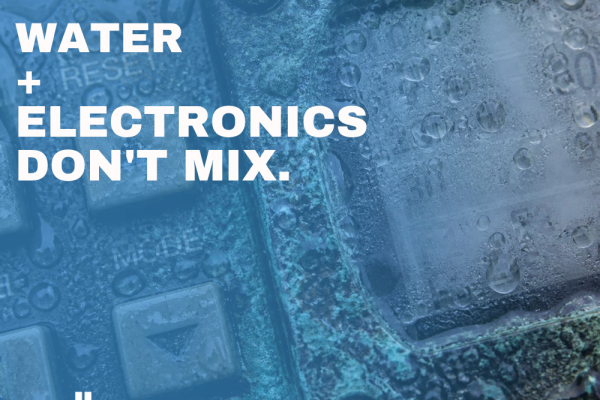
Moisture is particularly damaging because it doesn’t just corrode components; it can cause intermittent short circuits that make the failure hard to diagnose. The controller may work fine one day and fault out the next, making it look like a software issue or a sensor problem when the real culprit is moisture bridging contacts inside the housing.
What to do about it:
If your controller is showing intermittent, hard-to-reproduce faults, contamination is worth investigating. When you send a controller in for repair, let us know if the unit was exposed to moisture or chemicals. That information helps our technicians know where to look and it often speeds up the diagnostic process significantly.
3. Electrical Surges and Wiring Issues
Controllers are sensitive to the quality of the power they receive. A bad battery, corroded cable connections, or a wiring harness that’s seen better days can send irregular voltage to the controller, and over time, that irregular power causes real damage.
We also see failures caused by improper jump-starting or battery charging. Connecting a charger incorrectly, or using a charger that doesn’t match the voltage requirements of the system, can send a surge directly through the controller. Sometimes the damage is immediate. Sometimes it’s cumulative; the controller works until it doesn’t.
What to do about it:
Before reinstalling any repaired controller, inspect your battery terminals, cables, and connectors for corrosion or loose connections. If your battery is old or underperforming, address that too. A repaired controller going back into a system with bad wiring is a repaired controller on borrowed time.
4. Component Wear Over Time
Controllers don’t last forever. Like any electronic component, the parts inside wear with use, and some wear faster than others. Potentiometers (the sensors that translate operator input into signals the controller can read) are a common weak point. Throttle pedals, lift controls, and other operator interfaces put continuous stress on the pots, and when they start to degrade, they feed bad signals to the controller.
A faulty potentiometer can cause symptoms that look like a controller failure, erratic behavior, fault codes, reduced performance when the controller itself is actually fine. We see this regularly. The controller comes in for repair, our technicians diagnose it, and what we actually find is that the controller was responding exactly as designed to bad input from a worn-out pot.
What to do about it:
If your controller is faulting out, don’t assume the controller is the problem. It might be. But it might also be a sensor, a switch, or another input device upstream of the controller. A good repair shop will look at both and flag external causes in their documentation so you can address them before reinstalling.
5. Physical Damage and Improper Handling
Controllers are electronics. They don’t respond well to being dropped, jolted, or improperly mounted. Physical damage isn’t always obvious from the outside; a controller can look completely intact while having broken solder joints, cracked circuit board traces, or dislodged components internally.
We also see damage from improper installation: controllers mounted in locations where they’re exposed to vibration without adequate support, or where they’re regularly contacted by other components during operation.
What to do about it:
When sending a controller in for repair, protect it during shipping. Use appropriate padding as the same kind of damage that happened in the field can happen in transit. And when reinstalling, make sure the mounting location is clean, secure, and clear of other moving parts.
The Bottom Line
Forklift controller failures are rarely random. There’s almost always an underlying reason, and understanding that reason is the difference between a repair that holds and one that fails again in a few weeks.
At Uniparts, every repair includes documentation of what we found and what needs to be addressed on your end before reinstallation. We’re not just fixing the part we’re helping you solve the problem.
If your controller is down, contact us at uniparts.net/contact-us or call us at (800) 323-1040. Tell us what you’re seeing, and we’ll take it from there.